Nihilism & Crisis
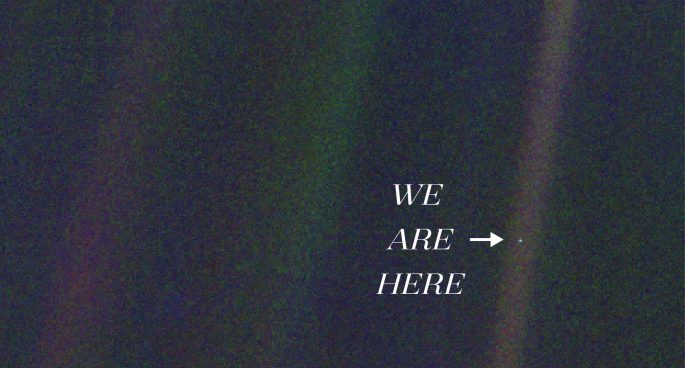
Carl Sagan’s pale blue dot “tale” usually reminds us how small and pointless our world problems are compared to the scale of the universe. The earth photographed by the Voyager 1 from billions of kilometres away renders an image of a tranquil and fragile place.
The analogy is a framework to help us think beyond our problems and soften our differences.
The same applies when we think about a meaning and a purpose related to the human experience. Not having a shared experience around those topics doesn’t make it less valuable. When religion was universally adopted, we felt spiritually interconnected having sociological ramifications.
Nihilism and purposelessness usually are channelled with a pessimistic attitude towards a lack of care. The problem with this point of view is the reality of the statement, which usually feels more like a performative attitude rather than a real point of view. In other words, how can an individual operate without a real care for anything else?
The performative action is based on an individual interpretation of society in which each individual creates a set of preferences. The deduction and interpolation means that society is built by a set of individuals who care about specific things and sometimes, we can found a commonplace. Still, in so many other topics we don’t find a strong commonplace, therefore the performative nihilist kicks in with a pessimistic explanation. Topics can vary widely, but a good example is climate change. The performative nihilist will describe how close to doom we are because climate change is not a preference on an individual level, therefore we lack the global awareness to make the change necessary to transcend an oil-based society.
The issue with this line of thought is that it seems to be a surrender before committing to analysing the topic. The framework does not allow to think critically about the subject matter in detail and allows fewer ways to think about a potential solution. Psychologically, the subject tries to unload the burden of a profound crisis with a pessimist philosophy so the overall worry does not exist anymore. The subject has re-signified existence to make it more bearable but under some heavy mental gymnastics.
With this counterargument I don’t plan to downplay the deepness of any crisis or enter into wishful thinking arguing that technology would solve everything. The main point is to avoid a default nihilist perspective that annihilates any critical thought and with that any future progress to be made to surpass any challenging crisis.